Odour neutralisation, engineered
Our essential-oil neutralisers don't cover a smell with a stronger one — they combine with odorous molecules in the air to form new compounds with no odour at all. H₂S, most mercaptans, ammonia and most amine odours can all be effectively neutralised. The odour suppression systems below are the delivery methods we design, build and install to get that chemistry to your odour source.
High-pressure fogging systems
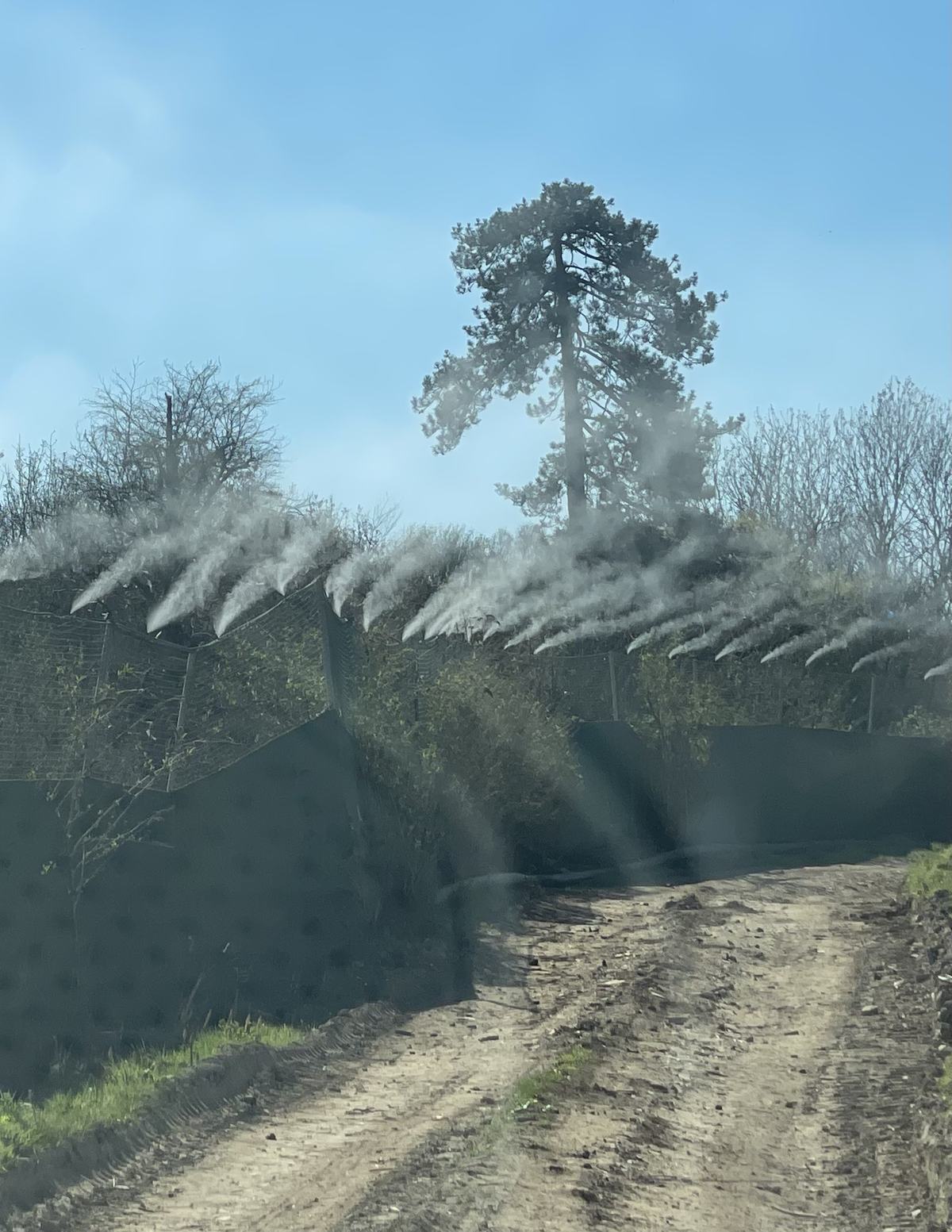
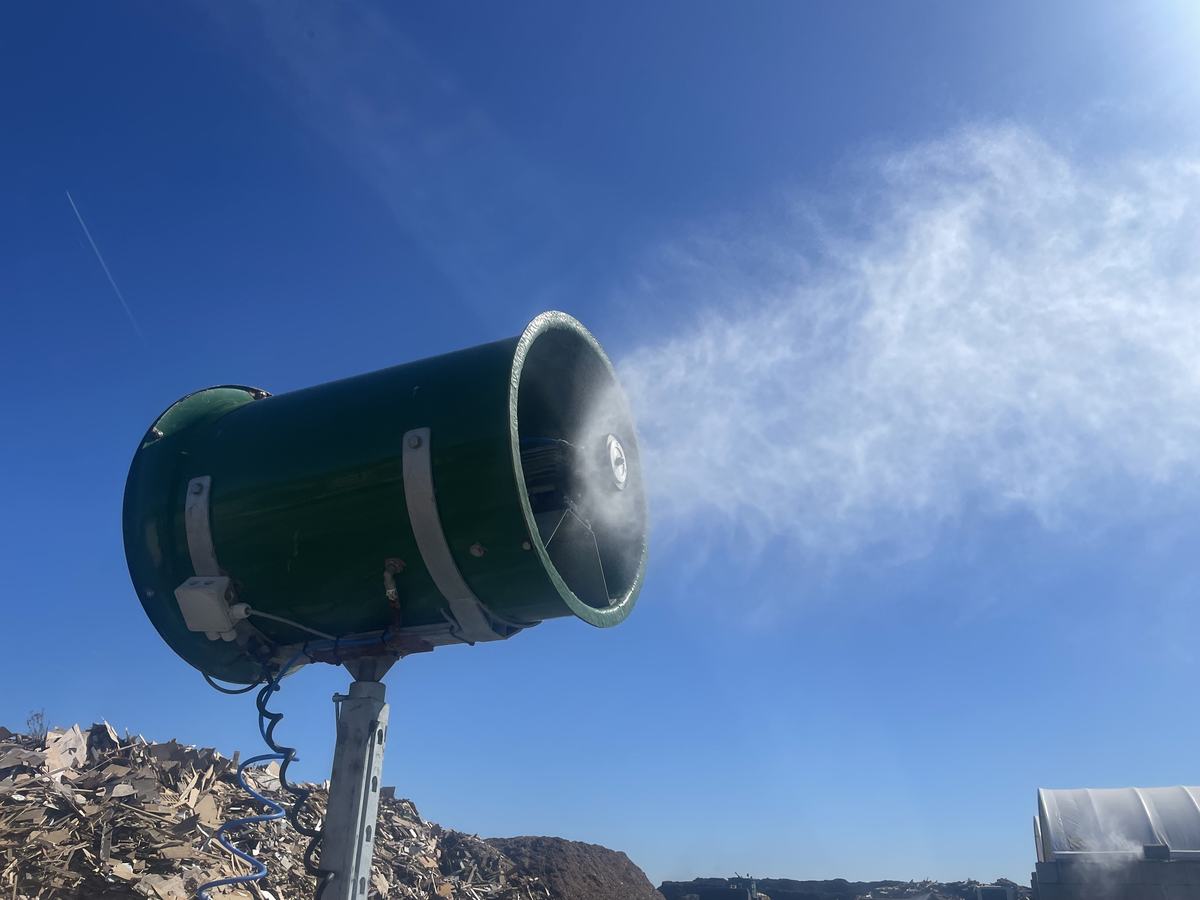
Neutraliser solution is dosed, mixed with water and atomised at high pressure through stainless steel nozzles — producing droplets as small as 10 microns for maximum contact with odorous gas.
- Systems accommodate more than 300 nozzles
- 240 metres of nozzle line installed in under 40 minutes
- Base units sited and commissioned in under an hour
- Diverse applications: evaporative cooling — proven at a waste-to-energy plant where gallery temperatures exceeded 45°C
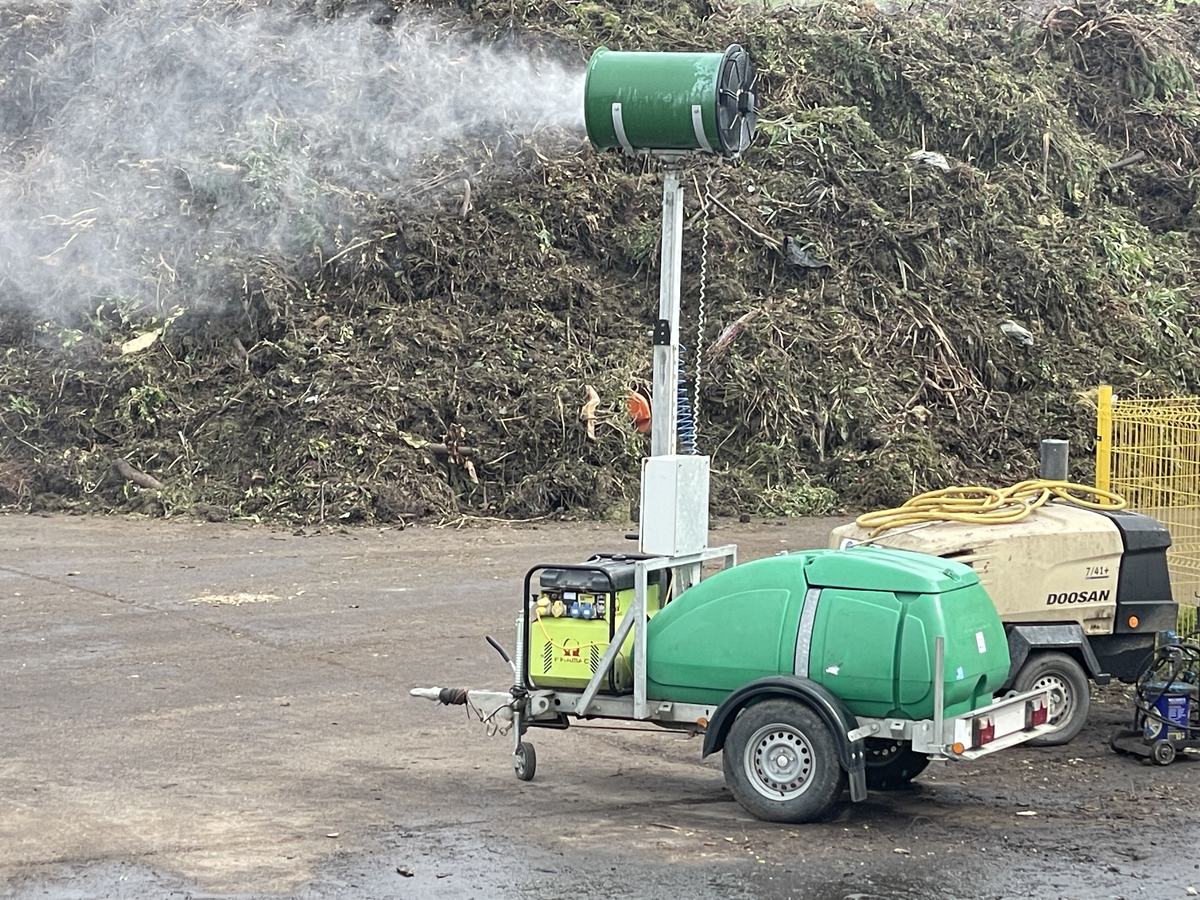
Mobile & stand-alone atomiser units
Workshop-built units that go where the odour is.
- 2,000-litre site-tow units — flotation tyres, telescopic mast, atomiser height of almost 5 metres, 360° rotating fan assembly
- 1,000-litre highway units — brakes and lighting for road use
- Stand-alone post-mounted units — connect water and power, push start; oscillating models cover the work of up to four static units
- Rotary atomisers: droplets from 35 microns, under 300 watts per atomiser, motor life over 30,000 hours
The Dry Vapour system
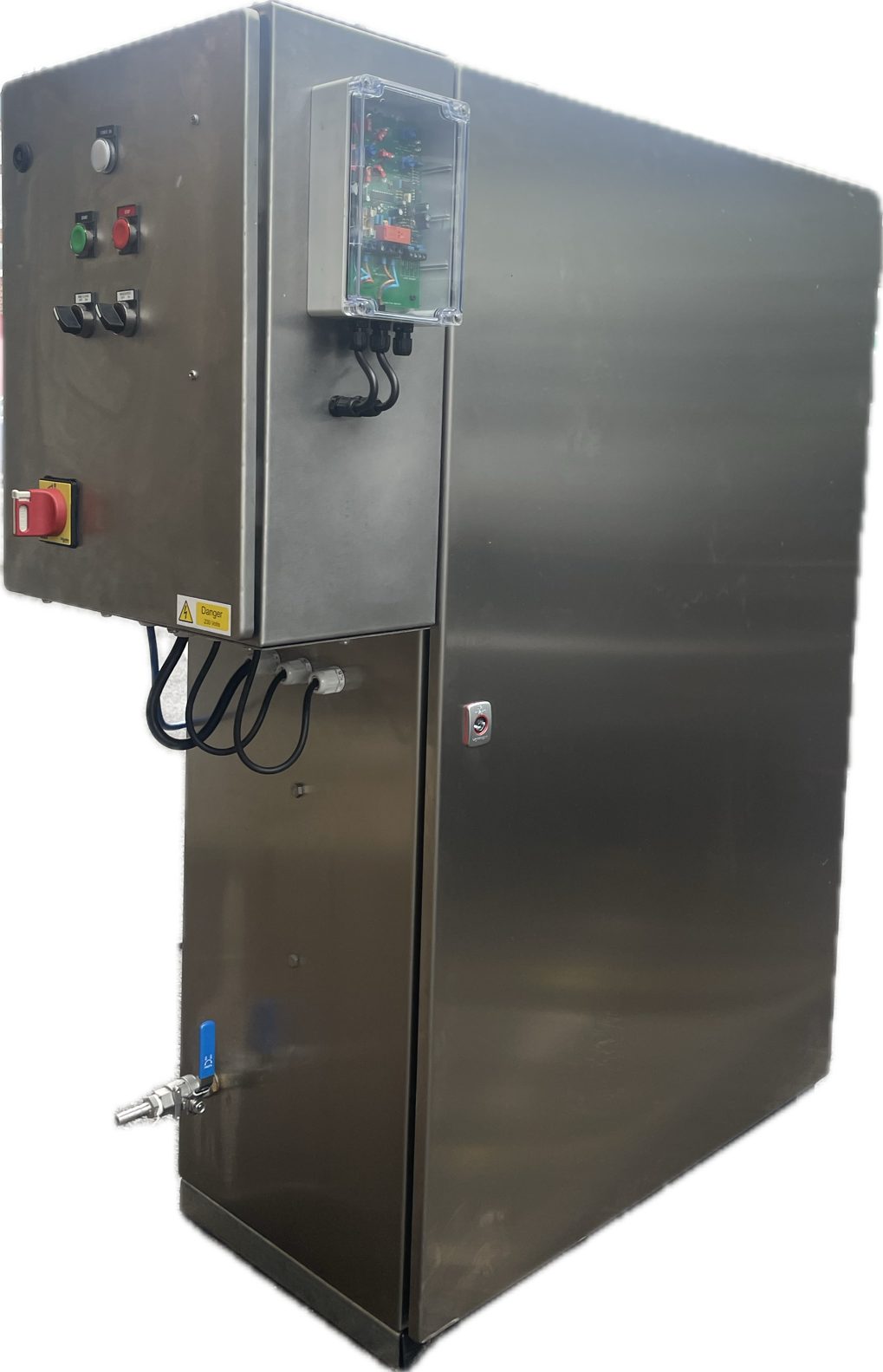
Odour neutralisation with no water, no wetting and virtually no maintenance — operating at a molecular level from as little as 60 watts.
- No storage tanks, no dosing equipment, no water supply
- Suitable for buildings, open yards, exhaust stacks and ventilation systems
- Immediate impact on deployment; non-toxic and non-corrosive
- Proven at waste transfer stations, EfW and rendering plants across the UK and Europe
The ODS-20 range
ODS-20 industrial odour neutralisers
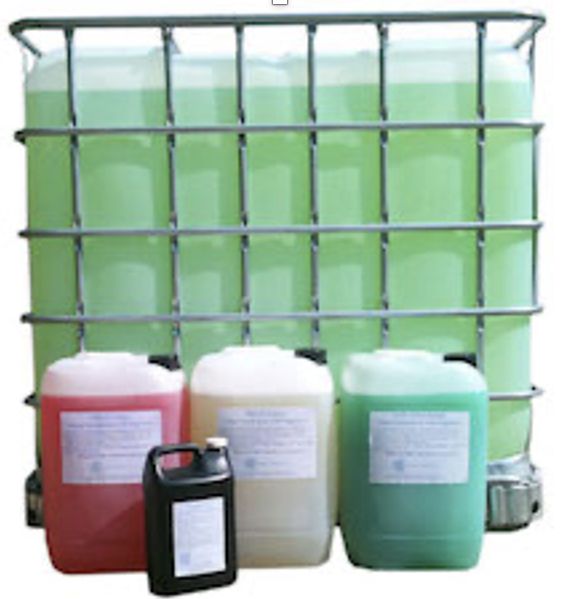
Bio-organic formulations that accelerate natural biodegradation — surfactants trap odour compounds while pre-formed enzymes break them down at source. 100% biodegradable, harmless to people, animals and the environment, and effective at low concentrations. Simply dilute with water. Specialist formulations include ODS-20 LCH for leachate lagoons and ODS-20 FD for food waste.
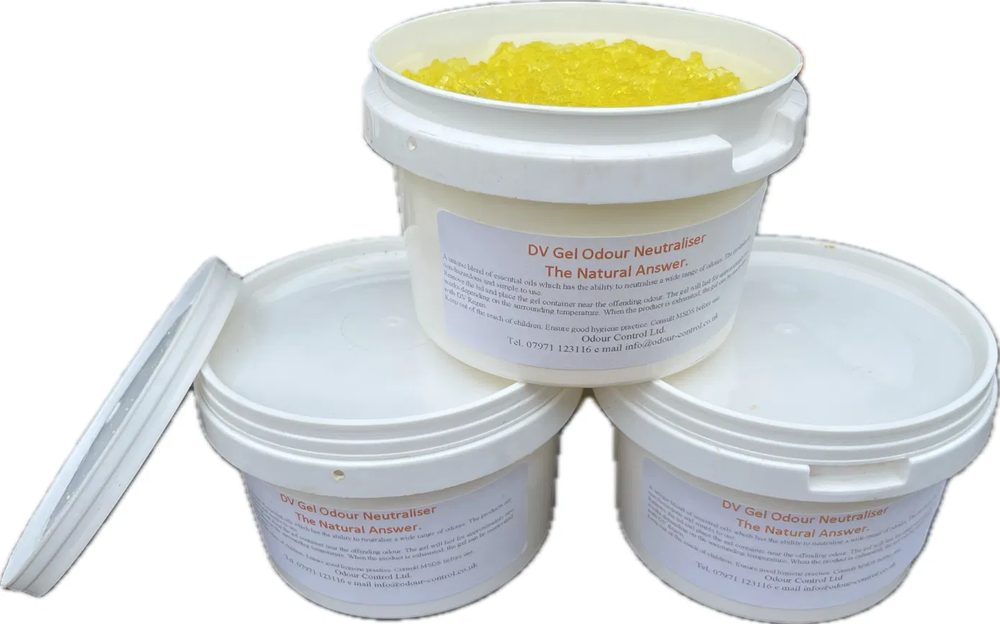
DV Gel Odour Neutraliser
A passive tub of gel beads that neutralises malodour wherever it’s a problem — kitchen extraction, offices, washrooms and toilets, plant and process extraction systems, and more. No power, no water, no installation, guaranteed four-week life — powered by Neusol DV, exclusive to us in England.
Neutralisation, not masking
A masking agent covers one smell with a stronger one, and everybody downwind knows it. An essential-oil neutraliser behaves more like a solvent, with the odorous material as the solute. Introduced into the air so that both absorption and adsorption take place in the vapour phase, the oil physically combines with the odorous molecule to form a new compound — one with no odour of its own.
Essential oils are drawn from the seeds, bark, roots, leaves, flowers, wood, resin and fruit of plants, then re-distilled to strip out what isn't wanted. What's left is complex: a single blend can carry hundreds of components, and one of our formulations contains over 200 trace elements at concentrations below one percent. That synergy is the point — a blend neutralises across a far broader range of odours than any one oil could alone.
What decides whether it works
- Surface area and contact time between the neutraliser and the odorous material
- Droplet size of the dispersed neutraliser — the finer the mist, the more contact per litre
- Temperature and concentration of both the neutraliser and the odour
H₂S, most mercaptans, ammonia and most amine odours can all be effectively neutralised. Certain heavy or saturated hydrocarbons are a harder problem and may need a tailored formulation — if your odour is one of those, we'd rather tell you at survey stage than after you've bought a system.
The numbers behind the systems
| Motor rating | 220 V three phase, 200 Hz, 12,000 rpm |
| Power supply | 230 V single phase 50 Hz, or 110 V 50 Hz |
| Droplet size | From 35 microns — lower still with certain neutralisers |
| Flow rate | 0.2 – 3.0 litres per minute per atomiser, on a precision flow meter |
| Power consumption | Under 300 watts per atomiser |
| Rated motor life | Over 30,000 hours continuous |
| Droplet size | From 10 microns — roughly a tenth the width of a human hair |
| Nozzle | Brass or stainless steel, 0.2 mm or 0.3 mm stainless orifice, fully cleanable |
| Consumption | Approximately 70 ml of solution per nozzle per minute |
| System capacity | More than 300 nozzles on a single system |
| Installation | 240 metres of nozzle line in under 40 minutes; base unit commissioned in under an hour |
| Operating range | Proven in continuous operation down to −9°C |
The same atomiser lines are used for dust suppression systems — run the motor slower for a coarser droplet and one installation handles dust and odour together.
Where it goes to work
Landfill
Neutraliser applied by hand to any area of ground giving off odour, or run from a bowser and towed across large areas — practical on sites too big to treat any other way.
Talk to us →Leachate lagoons
Applied directly to leachate, or injected into leachate tanks ahead of treatment, with immediate impact and no disruption to the existing workflow.
Talk to us →Waste transfer
Applied topically to odorous material to stop odour escaping at source — particularly effective on food waste held in bins in warm weather, where odour generation is at its most aggressive.
Talk to us →Composting & AD
Mist forces odorous vapour from shredded compost down to ground level, where the neutralising agent stops it leaving the site. Decomposition of the odorous compounds begins on contact.
Talk to us →Sewage treatment
H₂S suppression across sludge handling, screening and biosolids, plus pumping stations and rising mains — chemistry that's compatible with the biology the works depends on.
Talk to us →EfW & rendering
Enclosed, high-temperature environments where odour and heat arrive together — and where fogging delivers evaporative cooling alongside odour control.
Talk to us →Which system fits your site? Ask us.
Every installation starts with a free survey and an honest recommendation.
Talk to us