Bio-Block & SWG — FOG treated at source
Fat, oil and grease build-up clogs sewers, corrodes networks, generates H₂S odour and drives up tankering and maintenance costs. Our Bio-Block and SWG biological treatments put the problem to work against itself — colonising the grease with bacteria and enzymes that break it down continuously, with no power, no dosing equipment and no hazardous chemicals.
Enzymatic treatment — a twenty-year passion
The use of enzymatic products is, undoubtedly, an area of customer scepticism. Yet recent reports have shown the efficacy of Effective Microorganisms (EM) in breaking down the fat, oil and grease in our public sewers — the giant "fatbergs" that cause so many blockages.
Odour Control Ltd has been active in this area for the last twenty years, working with several industry experts to tailor solutions to specific substrates. Honestly? It's a passion — and we'd love to discuss any query you have, and to convince you of this planet-saving technology.
How the Bio-Block works
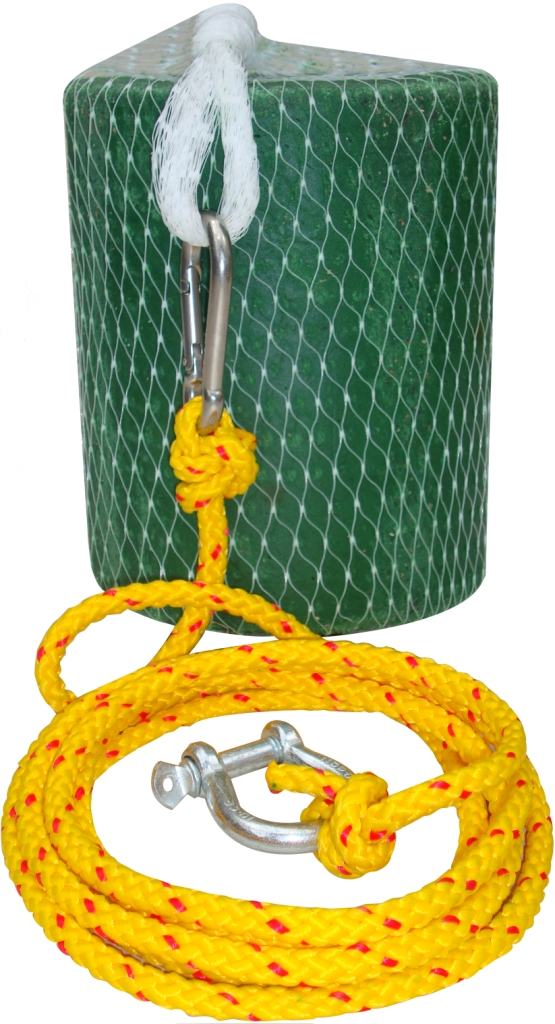
A cylindrical block of aerobic and facultative bacteria, enzymes and micronutrients, suspended in the wet well in a nylon mesh. The kick-start treatment — water-soluble pouches applied over the first weeks — colonises the grease itself, so the bacteria stay in contact with the FOG rather than being pumped away.
- Continuous passive operation — no dosing equipment, power or storage
- Reduces H₂S formation, corrosion and odour at source
- Fewer tanker movements, fewer maintenance hours, less foam
- BOD entering the works reduced by up to 30% — roughly 1.7 kWh saved per kg of BOD degraded
Biological vs chemical treatment
Chemical dosing for H₂S and FOG — ferric chloride, permanganate, nitrates, peroxide — demands storage tanks, dosing plant, continuous tanker traffic and hazardous handling. SWG biological treatment needs none of it: small manual doses, effects that persist for days after dosing stops, and a sewer network that starts working as an extension of the treatment plant. It degrades the fat rather than fighting the symptoms — and it costs significantly less.
What chemical dosing asks of you — and what SWG doesn't
Chemical treatment for H₂S and FOG splits into corrective (neutralising the H₂S once it has formed) and preventive (stopping it forming). Both bring the same overheads: tanks, dosing plant, tanker traffic and hazardous handling. Biological treatment works differently — and does several things the chemicals simply don't.
| Ferric chloride | Permanganate | Peroxide | Nitrates | SWG | |
|---|---|---|---|---|---|
| Large dose rate required | Yes | Yes | Yes | Yes | No |
| Dosing equipment required | Yes | Yes | Yes | Yes | No |
| Continuous dosing | Yes | Yes | Yes | Yes | No |
| Hazardous handling | Yes | Yes | Yes | Yes | No |
| Preventive treatment | No | No | Yes | Yes | Yes |
| Effect persists after dosing stops | No | No | No | No | Yes |
| Degrades fat & grease | No | No | No | No | Yes |
| Reduces BOD | No | No | No | No | Yes |
| Improves plant process | No | No | No | No | Yes |
| Can reduce energy use | No | No | No | No | Yes |
| Can reduce sludge | No | No | No | No | Yes |
SWG introduces a large population of aerobic and facultative bacteria, plus selected enzymes, into the network. They crowd out the anaerobic bacteria in the low-oxygen zones where H₂S forms, and break down the fats and oils accumulating on pipe walls and in lift stations. In effect the sewer starts working as an extension of the treatment plant. Dosing is manual, small, once or twice a day, with no dispensing equipment, power or water connection needed — and the effect carries on for several days after dosing stops.
One thing to expect at the start of a programme: grease entering the flow stream usually goes up for a while. That's the bacteria releasing what they've stripped off the walls of the wet well. It reads like a problem and is in fact the clearest sign the treatment is working.
Grease problem in your network? Start a trial.
We'll assess the wet well or network and propose a treatment programme.
Discuss a trial